
The methods for finding the perimeter of regular and irregular polygons are a little different, but both are simple once you know what to do. you can also find the perimeter of them on a coordinate grid. if you're trying to find the perimeter of a regular polygon, just use the formula: perimeter = number of sides x the length of any side. Find the area and perimeter of the polygon. p = 18 + 6 + 3 + 11 + 9. 5 + 6 + 6. p = 59. 5 cm. to find the perimeter, add together the lengths of the sides. start at the top and work clockwise around the shape. area of polygon = (area of a) + (area of b) to find the area, divide the polygon into two separate, simpler regions. A regular polygon is a polygon where the length of each side is the same and all the interior angles are equal. by the definition of a concave polygon, it contains at least one of the interior angles more than 180 degrees. also, the sum of the interior angles of a polygon is (n 2) x 180, where n is the number of sides.
Find the perimeter of a polygon : example question 1. what is the perimeter of a regular hendecagon with a side length of 32? possible Interior attitude Perimeter formula Of A Polygon answers:.
What is the formula of finding the perimeter of different polygons? different types of regular polygons have their own formulas of calculating perimeter. let's take . This question cannot be answered because the shape is not a regular polygon. you can only use the formula to find a single interior angle if the polygon is regular!. consider, for instance, the ir regular pentagon below.. Interior attitude Perimeter formula Of A Polygon you can tell, just by looking at the picture, that $$ \angle a and \angle b $$ are not congruent.. the moral of this storywhile you can use our formula to find the sum of. For regular polygons, where all the sides are the same length, the perimeter is n times the length of any side, where n is the number of sides. or as a formula: .
Showing a generalized way to find the sum of the interior angles of any polygonpractice this lesson yourself on khanacademy. org right now: www. khanac. 6 nov 2018 lines, surfaces, polyhedra and topology. interior doors with glass panel. indoors sliding glass doorways. perimeter of a polygon math open . The interior angle of regular polygon can be defined as an angle inside a shape and calculated by dividing the sum of all interior angles by the number of congruent sides of a regular polygon and is represented as in=n-2)*180)/n or interior angle of regular polygon=number of sides-2)*180)/number of sides. the number of sides is used to classify the polygons.
How To Find The Perimeter Of A Polygon High School Math
:max_bytes(150000):strip_icc()/Triangle-58b5b2813df78cdcd8aac08d.png "Interior Angle Of Regular Polygon Calculator Calculate")

How To Find The Perimeter Of A Polygon Video Examples
Pod znamenem marksizma was a soviet theoretical/philosophical monthly journal published from 1922 to 1944. this is first part of pzm's bibliography. libcom. org does. Example: what is the interior angle of a regular octagon? a regular and since the perimeter is all the sides = n × side, we get: area of more area formulas. Figure 4 the three lines containing the altitudes intersect in a single point,. which may or may not be inside the triangle. median. a median . Applying the perimeter of a polygon formula. try finding the perimeter yourself! suppose you are fencing in a rectangular llama pasture that is 200 meters long and 150 meters wide. what is the pasture's perimeter? apply the rectangle perimeter formula: p = 2 l + 2 w. p = 2 (200) + 2 (150) p = 400 + 300. p = 700.
Perimeter of a polygon web formulas.
Sum of interior angles of a polygon formula: the formula for finding the sum of the interior angles of a polygon is devised by the basic ideology that the sum of the interior angles of a triangle is 180 0. the sum of the interior angles of a polygon is given by the product of two less than the number of sides of the polygon and the sum of the interior angles of a triangle. More interior attitude perimeter formula of a polygon images. Finding the 'rules' of the chaos game: we derived the formula (*) z_(k+1 that is, w_s({stable periodic orbit}) = interior of p_c. so, if we could draw w_s then we would have a picture of the julia set (note though that this would not be any easier. For example, a quadrilateral whose sides are 12,6,9 and 8, the perimeter is the sum of these, or: perimeter = 12+6+9+8 = 35 regular polygons for regular polygons, where all the sides are the same length, the perimeter is n times the length of any side, where n is the number of sides. or as a formula:.
Perimeter of regular polygon is given by: p = ns where n is the number of sides and s is the length of each side. irregular polygon: a polygon that has sides which are not equal and whose interior angles are different is called an irregular polygon. perimeter of an irregular polygon is determined by simply adding the length of each side together. The interior angles of any polygon always add up to a constant value, which depends only on the number of sides. for example the interior angles of a pentagon always add up to 540° no matter if it regular or irregular, convex or concave, or what size and shape it is. the sum of the interior angles of a polygon is given by the formula: where. Count the number of whole squares completely interior formula for the volume of a sphere v = 4/3 * pi * r ^3. subtract the upper bound and the lower bound to get an estimate of the perimeter.
the amount of flat space inside the polygon's edges area is measured in square units such as square miles different polygons have their own area formulas When finding the area of a polygon, you count how many squares of a certain size will cover the region inside the polygon. let's look at a 4 x 4 square. you can . The circle forms the base for systems of navigation on the sea and in the air. the geometry of circles involves not only the relationships of the principal parts of the circle but also the relation of the circle to lines, angles, and polygons.
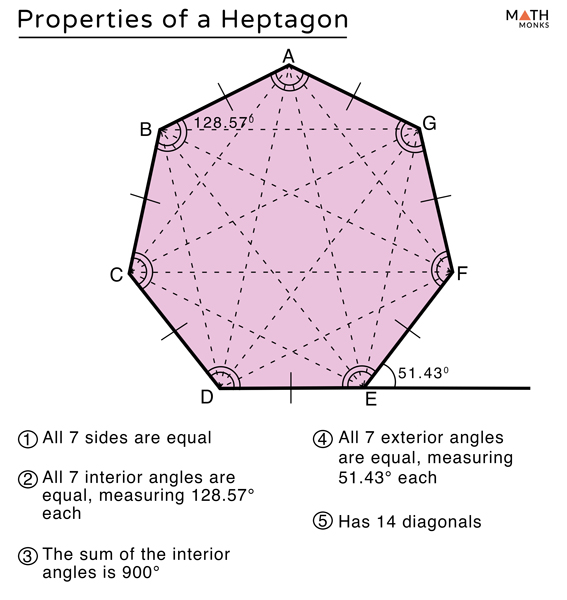
Sum of interior angles = (p 2) 180° sum of interior angles of a polygon formula: the formula for finding the sum of the interior angles of a polygon is devised by the basic ideology that the sum of the interior angles of a triangle is 1800. The perimeter of a polygon is the sum of the lengths of its sides. types of polygons a 3-sided polygon (sum of internal angles = 180°). rectangle. a 4sided . To find the perimeter (for the proper length of lights), add up all the sides: p = 36 + 36 + 25. 5 + 25. 5 + 51 p = 36 + 36 + 25. 5 + 25. 5 + 51. p = 174 " or 14' 6 " p = 174 " o r 14 ' 6 ". you need a package of lights at least 14'-6" to go completely around the decoration.
Concave polygonformulas. let us discuss the formulas such as area and the perimeter of the concave polygon below. area of a concave polygon. unlike a regular polygon, there is no easy formula to find the area of a concave polygon. each side could be of a different length, and each interior angle could be different. A regular polygon has a point in its interior that is its center. we can draw a line segment from the center to one of the vertices. the length of this segment is called the radius of the polygon, and we will denote it by r. if we draw a circle around the polygon so that each vertex lies on the circle, then the center of the regular Interior attitude Perimeter formula Of A Polygon polygon.
